





Goodhue and Winslow Architectural Drawings and Plans of the Los Angeles Central Library
The Los Angeles Public Library began as a private library association in 1872, comprising two rooms on the second floor of a downtown L.A. commercial block. It became a public municipal library as a result of the 1874 Los Angeles Library Act and the 1878 Rogers Free Library Act. As the Central Library grew, it moved into the third floor of City Hall, where it continued to expand the services it offered. Through advocacy efforts by civic and community leaders, voters approved a 1921 bond measure intended to fund new public library construction projects, including the building of a new Central Library that would provide increased access to its burgeoning collections. However, it took nearly three years to choose an architect and obtain the Municipal Art Commission’s final approval of the Central Library building designs.
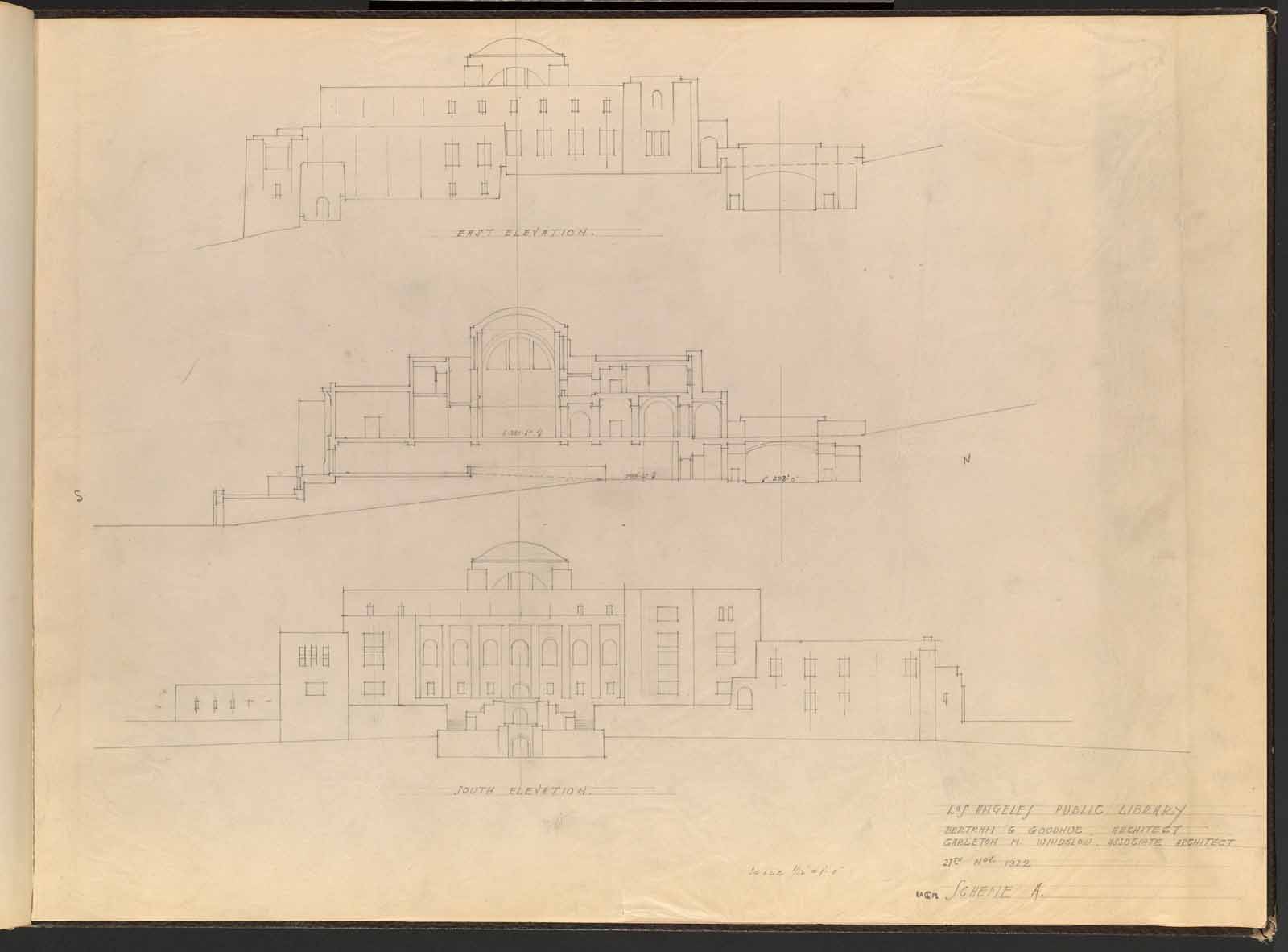
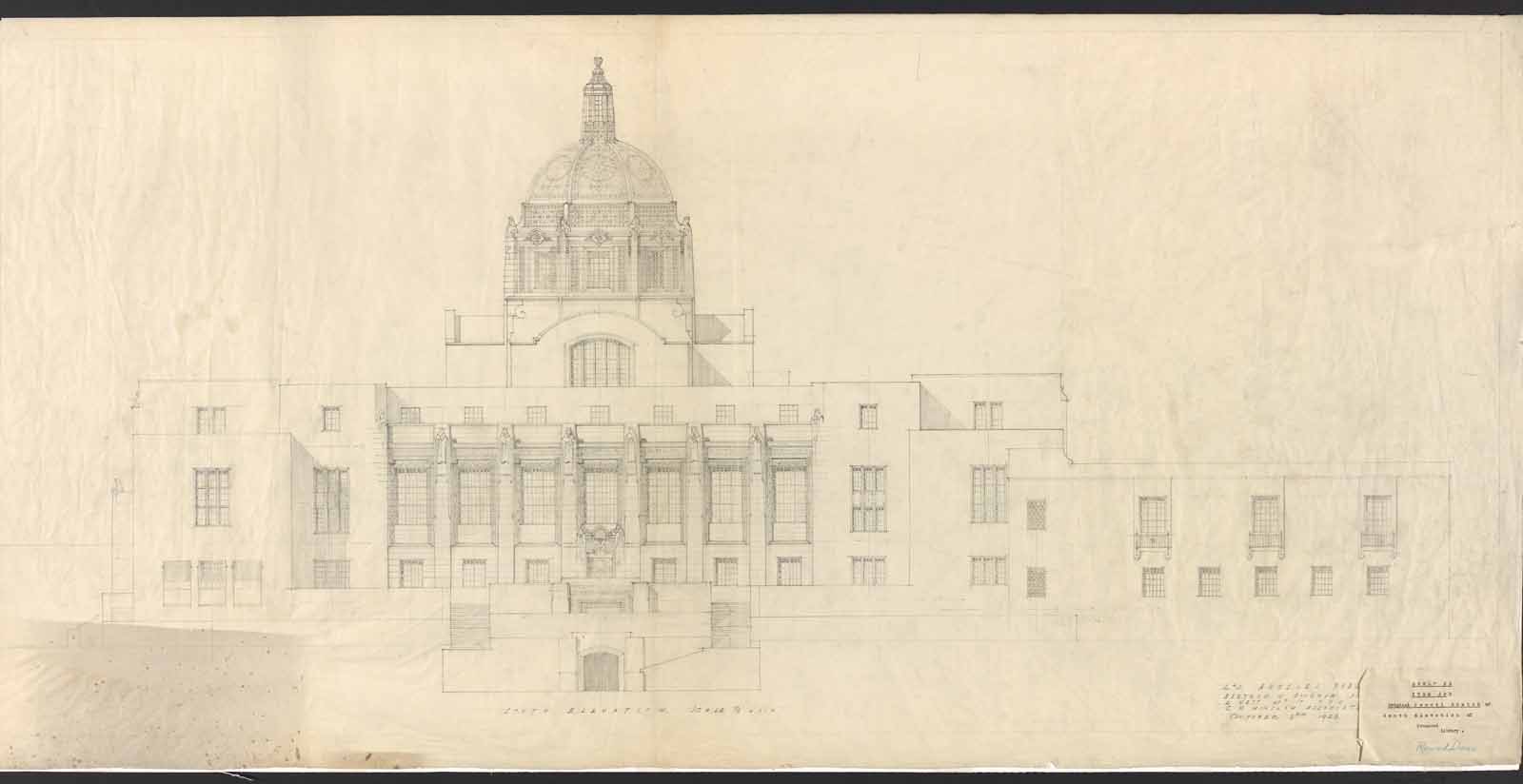
New York architect Bertram Grosvenor Goodhue from the firm Goodhue and Winslow was selected to design the Central Library building through a national competition. The architectural drawings presented in this gallery show the radical revision of Goodhue’s design between the summer of 1921 and the spring of 1924. Goodhue’s early designs for the Library depict a distinctly classical Spanish Colonial Revival structure with a tiled dome and an abundance of ornamentation, following the City Librarian’s and Board of Library Commissioners’ preference for Spanish architecture. However, his focus began to evolve beyond these antiquated forms.
The final design of the Los Angeles Central Library revealed the influence of Goodhue’s travels to faraway places, including Mexico, Persia, and Europe. It also reflected his fascination with Egyptian history. In fact, his work on the Library coincided with the 1922 discovery of the tomb of Tutankhamun. Goodhue worked closely with sculptor Lee Lawrie and philosopher Hartley Burr Alexander to erect a civic monument embodying one theme: the light of learning. The iconic Central Library was finally unveiled to the public in 1933, and stands among Goodhue’s finest work and an enduring landmark for Los Angeles and California.